Column · @kylerknml154
Why Little Senior Care Houses Are Ideal for Respite Care in Dementia
Business Name: BeeHive Homes of Henderson
Address: 1000 Greenway Rd, Henderson, NV 89002
Phone: (702) 551-0265
BeeHive Homes of Henderson
At BeeHive Homes of Henderson, Nevada, we offer the finest assisted living and memory care experience available in a cozy, comfortable homelike setting. Each of our residents has their own spacious room with an ADA approved bathroom and shower. We prepare and serve delicious home-cooked meals three times a day every day. We maintain a small, friendly community of only 20 residents per home. We provide regular activities that our residents find fun and contribute to their health and well-being. Our staff is attentive and caring and provides assistance with daily activities to our residents in a loving and respectful manner. We would like to invite you to tour and experience our memory care & assisted living home and feel the difference.
1000 Greenway Rd, Henderson, NV 89002
Business Hours
Families taking care of somebody with dementia reside on a knife edge in between deep love and continuous fatigue. I have sat with kids who have not slept a complete night in 2 years, partners who can not remember their last afternoon alone, and adult daughters trying to hold down jobs while managing medications and middle‑of‑the‑night wandering.
Respite care is not a high-end in those circumstances. It is survival. Yet many caretakers hesitate, frequently due to the fact that their photo of respite involves a large, institutional building, fluorescent lights, and their loved one getting lost in the shuffle.
Small senior care homes quietly use a various option. Typically accredited as residential care homes, board and care homes, or little assisted living, these settings normally serve 4 to 10 locals in a real house, with a little team of caretakers who know each person by voice and by gait, not just by name tag.
For individuals dealing with dementia, that scale can alter whatever, particularly when the goal is short term respite rather than irreversible placement.
What respite care truly suggests in dementia care
Respite care is brief term, prepared look after your loved one so you, the primary caretaker, can rest, attend to other responsibilities, or merely recuperate a little your own identity. Remains can vary from a single over night to numerous weeks, in some cases longer after a hospitalization or throughout a caregiver's medical leave.
In dementia care, respite is not just about offering the caregiver a break. It is likewise about maintaining stability for the person with dementia. Unexpected modifications, crowded environments, and turning personnel can set off agitation, confusion, or quick practical decrease. The best respite care balances 2 requirements: enough structure to keep the individual safe, and enough familiarity and calm to keep their nerve system grounded.
That is where the size and feel of the setting start to matter more than individuals think.
How small senior care homes vary from big facilities
Families frequently lump everything that is not a nursing home into one category labeled assisted living, but there is a meaningful difference between standard large assisted living communities and little senior care homes.
Large assisted living or memory care neighborhoods normally look like apartment complexes or hotels. They might house 60 to 150 locals, with facilities like dining spaces, activity calendars, transportation services, and separate memory care wings for those with moderate to sophisticated dementia. Staffing patterns are usually move based, with caregivers accountable for a group of residents that might change from day to day.
Small senior care homes sit in normal neighborhoods. Numerous look like any other single household home on the block, though they are adapted for ease of access and safety. Rather of long corridors and several floorings, there may be six private bed rooms and a shared living room, cooking area, and backyard. The same caregivers frequently work multiple days in a row, in some cases living on website, and the owner or manager is often on a given name basis with families.
When you walk into a great small home, what you discover is not the design. You see that the staff greeting your loved one currently understand who the "food authorities" remains in the family, who likes old westerns, and who refuses to drink water unless it is served in a specific mug. That level of understanding is possible exactly because of the small size.
For respite care, especially in dementia, that difference in scale equates into real advantages.
Why little homes fit the rhythm of dementia
Dementia modifications how an individual processes noise, light, motion, and social cues. A busy dining-room with 40 residents and piped‑in music might look joyful to a visitor, but for someone with cognitive disability it can seem like standing in an airport throughout a storm delay.
Small senior care homes naturally limit stimulation. There is less sound, fewer strangers, and less abrupt shifts. Staff are not trying to assist ten people to the dining-room at exactly 8:00 a.m. Breakfast can occur in a more natural method, which matters when your loved one wakes up gradually or has sundowning symptoms that move their sleep cycle.
Consistent faces also decrease stress and anxiety. In large structures, even excellent memory care wings might have three various caregivers across a 24 hr period, plus float staff who fill spaces. In little homes, coverage patterns are typically constructed around connection. The exact same caretaker who assists your father shave in the early morning might be the one who settles him for an afternoon nap and look at him in the evening.
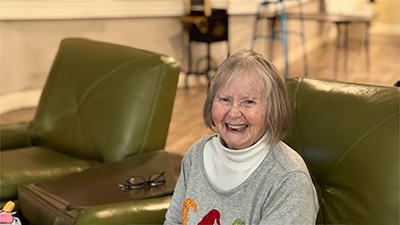
Over a brief respite stay, that connection can make the distinction between an individual intensifying on day two, insisting on "going home today," and a person slowly relaxing into the brand-new environment.
I remember a retired carpenter with moderate dementia who entered into a six bed home for a 10 day respite while his wife recuperated from surgical treatment. The very first early morning he paced near the front door, coat in hand, specific that he was late for a task. The caregiver on responsibility did not try to talk him out of it with reasoning. Rather, she walked him to the small fenced yard, pointed to a loose board on the garden gate, and asked if he could "take a look considering that you understand this stuff much better than I do." He spent a half hour carefully analyzing and "preparing the repair work," his stress and anxiety dropping as his identity as a capable employee was honored. That kind of individualized redirection is far easier when there are 5 homeowners in the house, not fifty.
Flexibility that matches real household needs
Family caregivers hardly ever require a neat, when a month Saturday off. Life is messier than that. A sibling gets here for a surprise visit, your own medical procedure gets moved, your boss suddenly expects you at a 3 day training. Many big assisted living or memory care neighborhoods need fixed, minimum respite stays and book up weeks ahead of time. Their size and staffing designs make short, versatile stays harder to accommodate.
Small homes, specifically owner operated ones, frequently have more space to maneuver. They might want to:
- Accept a two or three night stay on much shorter notification when a bed is readily available
- Offer "day respite" where your loved one spends daytime hours at the home, then goes back to oversleep their own bed
- Build a recurring pattern, like one weekend a month, however change when family schedules shift
That level of flexibility is not universal, but it is something you are most likely to find in a little setting that can decide case by case, instead of sticking to a corporate policy designed for 100 residents.
For dementia care, the ability to begin with really short stays can be a significant advantage. An individual with moderate or moderate problems might tolerate a three hour visit or a single over night far better than an abrupt two week positioning. You can gradually develop familiarity, staff can learn your loved one's patterns, and by the time you need a longer break everybody is running from experience instead of guesswork.
The psychological truth: feeling "at home" matters
One of the most uncomfortable parts of setting up respite care is the fear that your loved one will feel deserted or warehoused. That worry does not vanish even if you understand you frantically require rest.
The physical design of small senior care homes assists soften that blow. Sitting at a regular table, seeing somebody cook eggs in a normal kitchen, or hearing the washing device hum in the background strikes most older grownups as ordinary life. For people who grew up in houses, not apartments, the scale reads as familiar. Their body typically relaxes before their mind captures up.
Even for locals with advanced dementia who can not explain what they see, the hints exist: much shorter corridors, fewer doors, no intercom announcements, a front patio rather of a lobby. That sensory environment supports the psychological message you are trying to send, which is, "You are safe, took care of, and in a real home," instead of, "You are now in an institution."
Families also find it easier to visit. Parking at the curb, strolling up a front path, and sounding a doorbell matches decades of social experience. When you come by during a respite stay, you enter the very same kind of setting you have actually always shared with your loved one, which helps protect the sense of connection. You are not browsing elevators, reception desks, and visitor badges for a quick cup of tea together.
For lots of caretakers, that feeling is as important as any clinical factor to consider. It is much easier to state yes to respite when the environment lines up with your own worths about what aging with self-respect should look like.
Safety, supervision, and medical limits
Safety is typically the first question families raise, and they are ideal to do so. A small home that really focuses on dementia care should take wandering, falls, and medication management as seriously as any large memory care facility.
Good little homes adjust their physical environment: protected but not prison‑like exits, clear sight lines from the cooking area or caregiver station to common locations, uncluttered floorings, contrasting colors on stairs and bathroom fixtures, and easy outdoor spaces that allow fresh air without risky elopement. Since there are fewer citizens, personnel can generally see subtle changes rapidly, such as someone preferring one leg or declining a favorite food.
The staffing design is various, nevertheless, and families must comprehend that distinction. Many small senior care homes are not certified to supply skilled nursing. They typically handle chronic conditions such as diabetes, cardiovascular disease, and mild to moderate mobility concerns, but they might not be proper if your loved one has:
Severe, hard‑to‑control habits that need regular medication modifications, such as violent aggression.
Complex medical devices, such as ventilators. A requirement for on‑site physical, occupational, or speech treatment several times a week.Some homes do generate visiting hospice, home health, or therapy providers, which can extend what they can safely manage. It is important to ask really concrete concerns about who will in fact be on site during your loved one's respite stay, what their training is, and how emergency situations are handled.
In my experience, when expectations are clear, little homes can supply exceptional dementia take care of individuals who are medically steady but require close cueing, redirection, and aid with all the activities of daily living. The setting is particularly strong for people who are prone to anxiety or overstimulation in big groups.
When bigger assisted living or memory care might be the much better fit
As much as I appreciate the strengths of little homes, they are not the ideal setting for every respite situation.
A bigger assisted living or dedicated memory care neighborhood may be more effective when your loved one:
Has extremely high medical requirements with regular nursing interventions.
Is already residing in a similar big community and a respite stay in a sister facility would be mentally less disruptive. Enjoys and looks for continuous social stimulation, big group activities, and frequent outings that small homes can not reasonably provide. Needs specialized behavioral programs or protected memory care units that some small homes do not use.Some families likewise feel more comfortable in a setting with noticeable branding, business oversight, and on‑site clinical directors. There can be a sense of reassurance in understanding that policies, training programs, and quality metrics are standardized across several locations.
The secret is not to assume that larger automatically implies better care, or that smaller automatically suggests more individual. Both models vary extensively in quality. The best match depends upon your loved one's profile, your goals for respite, and the real people running the specific home or community you are considering.
Cost, coverage, and what to expect financially
From a financial viewpoint, respite care typically falls into the very same classification as assisted living or non‑skilled senior care: it is mainly personal pay, a minimum of in the United States. Conventional Medicare does not cover room and board in assisted living or little homes. It may, under hospice or short-term competent nursing advantages, cover some medical services, but households need to not rely on Medicare paying for general respite in a residential setting.
Rates for small senior care homes vary by area, however day-to-day charges for respite are often in the very same ballpark as the prorated regular monthly rate for long-term homeowners. You may see day rates from approximately 150 to 350 dollars, depending upon location, level of dementia care needed, and whether the rate consists of all care or tiers based upon help with bathing, transfers, and continence.
Potential sources of assistance consist of:
Long term care insurance policies with benefits that specifically cover assisted living or residential care homes.
State Medicaid waiver programs that support community‑based senior care, although lots of small homes do not participate due to low repayment rates. Veterans benefits, such as Aid and Attendance, which may offset costs in some cases.Families should request for a composed breakdown of what is consisted of in the respite rate, and what is extra. Medication management, incontinence products, transportation to visits, and personal items can all be handled differently from one home to another.
Small homes often have easier billing, with fewer concealed fees than large neighborhoods that charge individually for each service tier. That openness can help you prepare, especially if you expect requiring respite on a repeating basis.
How to evaluate a little home for dementia respite
Walking through the front door will tell you more than any brochure. Throughout tours and discussions, focus less on the paint color and more on what personnel actually do and state. A short, useful checklist can hone your observations.
Here are questions I typically motivate households to ask:
- Who will be here with my loved one overnight, and how many homeowners will that individual be responsible for?
- How lots of other residents have dementia, and what is their basic level of function compared to my loved one?
- Can you stroll me through exactly what a normal day might look like for somebody like my mother or father during a respite remain?
- How do you deal with a resident who ends up being agitated or insists on going home, especially during the first couple of days?
- How will you collect details from me about routines, sets off, likes, and dislikes before the stay begins?
As you ask, take notice of whether the answers sound scripted or grounded in specific stories. A director who says, "We constantly keep residents hectic with activities" is less encouraging than one who explains how they noticed that Mr. S ends up being calmer if he folds towels at 4 p.m., because that lines up with his long-lasting routine of correcting the alignment of the house before dinner.
Trust your senses too. The smell of home‑cooked food, the tone of caretakers talking to present homeowners, and the method staff react to a call light throughout your tour all tell you how respite will feel at 2 a.m. When you are not there.
Preparing your loved one (and yourself) for a respite stay
Transition is frequently the hardest part. Even in the very best little home, an individual with dementia may show more confusion, clinginess, or agitation during the very first 24 to 72 hours. That does not mean the positioning is wrong. It is usually a sign that their brain is striving to adapt.
You can smooth the method by starting early. Bring the home into regular discussion weeks ahead of time. Refer to it as a place where "we have some assistants" or "your trip home where individuals know how to cook your preferred meals." Prevent in-depth explanations that count on short term memory. Easier, duplicated messages are kinder.
Choose what to send thoroughly. A familiar blanket, a few identified images, a preferred respite care sweater with a distinct texture, and an individual mug can work as anchors. Too many items can overwhelm both your loved one and the limited storage of a small home.
Work carefully with staff before the first day. Share a composed snapshot of your loved one: former profession, relative, essential losses, spiritual beliefs, and extremely concrete details like how they prefer their coffee or which side they roll towards to rise. Good dementia care in a small setting rests on those specifics.
For yourself, anticipate mixed feelings. Relief and regret frequently show up in the exact same breath. Lots of caretakers call the home multiple times on the first day, then gradually relax as they hear that their loved one has consumed lunch, took a walk, or asked staff for "my daughter" by name. The best small home will welcome those calls, particularly throughout a preliminary respite, and will communicate proactively if anything considerable arises.
Red flags and thumbs-ups to view for
Not every little senior care home is well suited for dementia respite. Some are excellent with relatively independent senior citizens but less prepared for cognitive decrease. Others do great with long term homeowners but do not change staffing or regimens for short stays.
During your search, look for these contrasting indications:
- Staff who speak directly to your loved one at their eye level and await reactions, even if sluggish, are a green light. Staff who just speak about the resident in the 3rd person, as if they are not present, are a red flag.
- A home that can explain specific dementia friendly activities adjusted to resident capabilities is a green light. Vague promises of "lots of video games" without examples are a warning.
- Clear policies about communication throughout respite, including how and when you will get updates, are a thumbs-up. Incredibly elusive or inconsistent responses about contact are a warning.
- A desire to begin with a much shorter trial stay and then reassess is a green light. Pressure to commit right away to a long stretch of respite without versatility is a red flag.
- Clean but lived in typical areas, with residents noticeable and engaged at their own speed, are a thumbs-up. Locals left alone in front of a television for hours, or confined to rooms without description, are a warning.
If you come across a number of severe red flags, keep looking. There are many little homes that take dementia care and respite seriously; you are not bound to settle for one that does not.
The peaceful strength of small homes in a strained system
Family caregivers sit at the center of dementia care. Hospitals, centers, adult day programs, assisted living, and memory care centers all play roles, but it is the daughters, boys, spouses, and pals who hold things together at 3 a.m. When someone is roaming or sobbing and confused.
Small senior care homes will not fix the structural gaps in our senior care system. They will not eliminate the grief of watching a loved one change. What they can do, when well chosen, is use a gentler sort of respite: a location where the scale matches the human nervous system, where routines bend to fit the individual instead of the other method around, and where your loved one is more likely to be known as an entire individual rather than a room number.
For lots of families facing dementia, that mix of personal attention, versatility, and home‑like environment makes little homes an ideal setting for respite. It allows caregivers to rest without sensation that they have actually traded empathy for benefit. In a journey defined by numerous challenging compromises, that is no small gift.
BeeHive Homes of Henderson provides assisted living care
BeeHive Homes of Henderson provides memory care services
BeeHive Homes of Henderson provides respite care services
BeeHive Homes of Henderson supports assistance with bathing and grooming
BeeHive Homes of Henderson offers private bedrooms with private bathrooms
BeeHive Homes of Henderson provides medication monitoring and documentation
BeeHive Homes of Henderson serves dietitian-approved meals
BeeHive Homes of Henderson provides housekeeping services
BeeHive Homes of Henderson provides laundry services
BeeHive Homes of Henderson offers community dining and social engagement activities
BeeHive Homes of Henderson features life enrichment activities
BeeHive Homes of Henderson supports personal care assistance during meals and daily routines
BeeHive Homes of Henderson promotes frequent physical and mental exercise opportunities
BeeHive Homes of Henderson provides a home-like residential environment
BeeHive Homes of Henderson creates customized care plans as residents’ needs change
BeeHive Homes of Henderson assesses individual resident care needs
BeeHive Homes of Henderson accepts private pay and long-term care insurance
BeeHive Homes of Henderson assists qualified veterans with Aid and Attendance benefits
BeeHive Homes of Henderson encourages meaningful resident-to-staff relationships
BeeHive Homes of Henderson delivers compassionate, attentive senior care focused on dignity and comfort
BeeHive Homes of Henderson has a phone number of (702) 551-0265
BeeHive Homes of Henderson has an address of 1000 Greenway Rd, Henderson, NV 89002
BeeHive Homes of Henderson has a website https://beehivehomes.com/locations/henderson/
BeeHive Homes of Henderson has Google Maps listing https://maps.app.goo.gl/qpZ3TKgbxCu1MVSh8
BeeHive Homes of Henderson has Instagram page https://www.instagram.com/beehivehomeshenderson/
BeeHive Homes of Henderson has an YouTube page https://www.youtube.com/@hamiltonshives4468
BeeHive Homes of Henderson won Top Assisted Living Homes 2025
BeeHive Homes of Henderson earned Best Customer Service Award 2024
BeeHive Homes of Henderson placed 1st for Senior Living Communities 2025
People Also Ask about BeeHive Homes of Henderson
What is BeeHive Homes of Henderson Living monthly room rate?
Our base rate is $4,700 per month for assisted living and $5,700 per month for memory care plus a one-time community fee of $2,500. We do an assessment of each resident's needs prior to move-in, so each resident's rate may be higher. These prices fall into three tiers based on resident needs and range from $4,700/month to $7,300/month. However, after we do the assessment and quote a price, there are no add-ons or hidden fees
Does Medicare and Medicaid pay for a stay at Bee Hive Homes?
Medicare pays for hospital and nursing home stays, but does not pay for assisted living. Some assisted living facilities are Medicaid providers but we are not. We do accept private pay, long-term care insurance, and we can assist qualified Veterans with approval for the Aid and Attendance program
Do we have a nurse on staff?
We do have a nurse on contract who is available as a resource to our staff but our residents' needs do not require a nurse on-site. We always have trained caregivers in the home and awake around the clock
What can you tell me about the food at Bee Hive?
You have to smell it and taste it to believe it! We use dietitian-approved meals with alternates available for flexibility, and we can accommodate needs for different textures and therapeutic diets. We have found that most physicians are happy to relax diet restrictions without any negative effect on our residents
Do we allow pets?
We do allow small pets as long as the resident is able to care for them. State regulations also require that we have evidence of current immunizations for any required shots
Where is BeeHive Homes of Henderson located?
BeeHive Homes of Henderson is conveniently located at 1000 Greenway Rd, Henderson, NV 89002. You can easily find directions on Google Maps or call at (702) 551-0265 Monday through Sunday 9:00am to 5:00pm
How can I contact BeeHive Homes of Henderson?
You can contact BeeHive Homes of Henderson by phone at: (702) 551-0265, visit their website at https://beehivehomes.com/locations/henderson/ or connect on social media via Instagram or Facebook
Take a drive to Yoshiya Japanese Kitchen. Yoshiya Japanese Kitchen offers a nearby dining destination where families supporting loved ones through Assisted living memory care senior care elderly care and respite care can gather for quality time together.